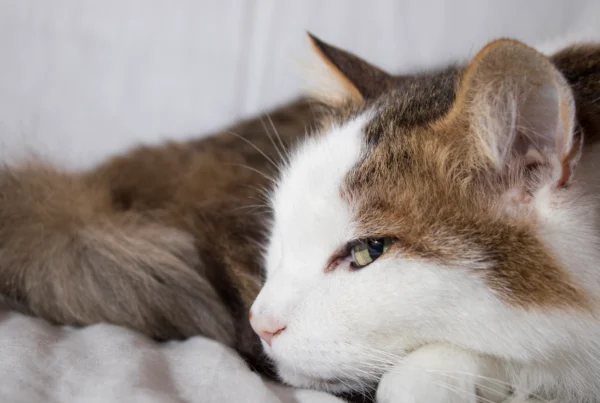
Diabetes produces a dramatic increase in thirst, frequent urination and weight loss despite an increased appetite.
Diabetes mellitus happens when the body cannot make enough insulin or cannot use it properly. Without insulin, sugar builds up in the blood instead of fueling the body's cells.
Who is at risk?
Diabetes is most common in middle-aged and older pets. Being overweight raises the risk, especially in cats. Certain breeds and some medications can also play a role.
Signs to watch for
- Drinking much more water than usual
- Urinating more often or having accidents
- Losing weight while eating well or eating more
- Low energy, or cloudy eyes in dogs
- In cats, a flat-footed, wobbly walk in the back legs
Diagnosis and treatment
A simple blood and urine test from our in-house lab can confirm diabetes, often the same day. Most diabetic pets do well with insulin injections, a consistent diet and regular monitoring. Some cats can even go into remission with early treatment and weight loss.
If your diabetic pet is vomiting, very weak or will not eat, call us right away or contact Gilbert Emergency Animal Clinic at (480) 497-0222 after hours.
This article is for general education and is not a substitute for an exam. Always talk with your veterinarian about your pet's specific needs.